


|
Navigation
Search
|
Wispr CEO: What a post-keyboard office might look like
Wednesday December 31, 2025. 12:00 PM , from ComputerWorld
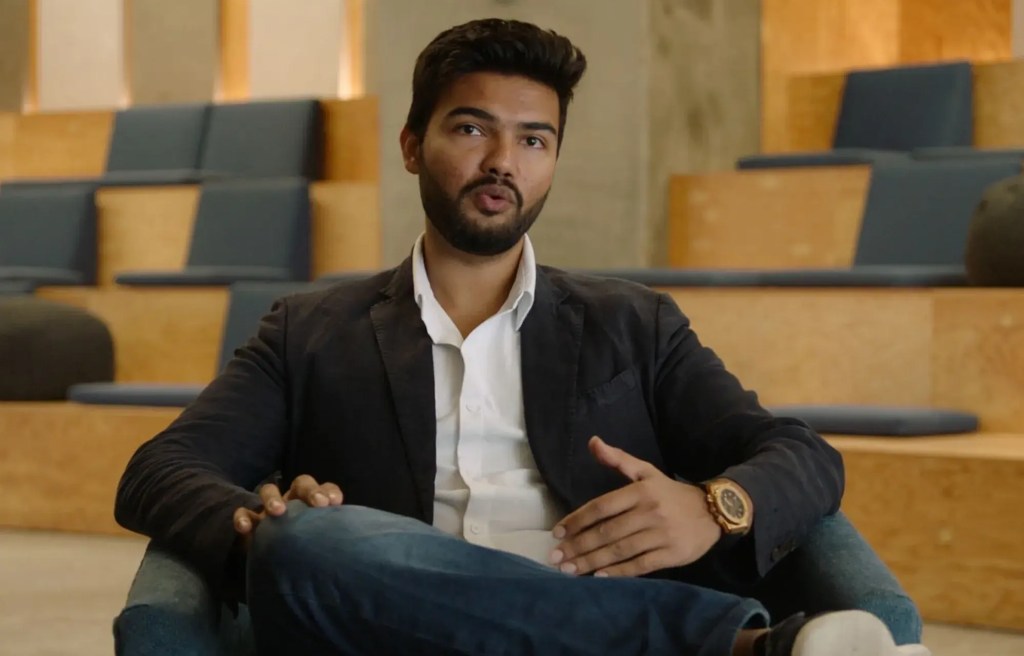
Wispr, a startup with $81 million in funding and a reported $700 million valuation, hopes to change that. Its Flow dictation tool turns speech into text across any desktop or mobile app — from Slack and Gmail to AI assistants such as ChatGPT. Flow automatically edits the transcript of a user’s speech to remove filler words and typos. Wispr claims its outputs are more accurate than other dictation tools — including those built into AI assistants — thanks to Wispr’s “voice-first models.” These are trained on how people actually speak, according to Wispr, learning transcription, formatting, and intent together, “rather than bolting speech recognition onto a general-purpose language model.” For text editing, it uses the open-source Llama 3.1 model, combined with proprietary models from the likes of OpenAI. It’s also capable of tracking speech at low volumes, according to Wispr CEO Tanay Kothari, which could help alleviate discomfort when talking in an open-plan office. Wispr CEO Tanay Kothari Wispr With around 125 new customers a week, Flow is gaining traction among businesses and being adopted across a range of professions, from legal teams to sales and engineering. Computerworld recently spoke with Kothari about how Flow affects productivity and why voice technology may finally be ready for mainstream use in the workplace. The interview has been condensed and edited for length and clarity. What challenges does Wispr Flow address around the use of voice technology in the workplace? “Typing is a big part of everyone’s life: most communication is asynchronous, with lots of documents, and everything we’re doing with AI is also very prompt focused— if you can give AI systems more context, they just perform better. And typing on phones sucks even more than typing on desktops: many people don’t send emails or long messages on their phone. “People report that their lives look different after using Wispr Flow. On average, they reduce their daily typing time from five hours to three. After about five months, 72% of users’ computer activity happens with Flow, compared to less than a quarter with the keyboard. “AI tools are the gateway drug for people to start using Flow. They download it, use it with ChatGPT or Cursor, and by week two or three they realize, ‘Why don’t I use this everywhere?’ Then they start using it for all their Slack messages and emails.” What are some typical use cases? What industries and roles do you see uptake in? “At Yahoo, the chief legal officer used it to draft legal paperwork and commenting on Google Docs and Word. At Ramp, the analytics team use it for all of their engineering workflows and also writing documentation. “At Upwind, a cybersecurity company, it’s the field sales team. When they go from one meeting to the next, they would have just typed a sentence into the CRM notes: “Good chat with Bob, he wants to buy.” That’s it. Now, they write much more detailed responses to their CRM instead, so their VP of sales started using it and deployed it across the entire sales org. “This year, Wispr has been growing at about 50% month over month, both in revenue and user base. Primarily it’s driven by word of mouth.” One of my initial hesitations about using a voice dictation tool is talking aloud in an office environment. Has this discomfort inhibited the adoption of voice tools in the workplace in the past? “It definitely has. I think of it in terms of ROI — how much value does this add for you, versus what is the cost? In this case, the cost is to change your behavior and do something different from everyone else around you. But if what you’re doing adds enough value, then it’s worth it. “These kinds of changes happen every 10 years or so. The first time phones came around, talking to a metal brick was pretty weird. Wearing AirPods and walking around, talking to nobody in the air, was really weird. But these things just worked, and if something solves a big problem, you’re willing to make the investment. “I do hear a lot of people say, ‘I don’t know if I want to use this in my office.’ What I often tell them is, ‘Just try it once.’ They usually have an ‘aha’ moment and realize, ‘Okay, this is a big unlock.’ In fact, among all the companies we work with, the majority are in-person, open-office workplaces, with people using voice tools around each other. “So yes, it’s going to be an uphill battle for us, like it is for any tool that requires behavior change, but it’s one I’m very happy to take on.” How does Wispr Flow compare to other voice tools in terms of accuracy? “Look at [competitors’] claims: they boast 95% word accuracy, which sounds impressive, but it actually means there’s likely to be a mistake in every sentence. We decided that getting everything perfect is what’s really important. “We measure Flow’s performance by the percentage of messages users send without making any changes to the output. That tells a very different story when you start comparing models. There are a few reasons for this. First, other models transcribe everything you say word-for-word, but that’s not what people want — you speak very differently to how you write, so the output should reflect how you would actually write. “The second thing is that context matters a lot. For example, ‘Brian’ can be spelled in five different ways; Flow uses context to figure out which you prefer. Flow also looks at your previous threads: were you formal or super casual? Should it start your message with a lowercase? And it does all of that on your behalf, in the background.” Wispr claims its speech recognition and editing models result in significantly fewer edits for users, compared with other speech-to-text models. Wispr How do you balance user data privacy concerns with some of the more advanced functionality? “Wispr is a tool that people use for many of their private, personal and professional conversations, myself included. We wanted to build it on a foundation of privacy, so we offer every person the ability to turn on privacy mode, which means zero data retention, regardless of whether they are on the free or paid tier. Nothing you say with Wispr is saved on servers or used for training our models. “About 25% to 30% of our user base opts in to help train our models, and we work with that data. For everyone else, we are very transparent — this is one of the first things you see when signing up for the product. “For enterprises, we allow them to enable and enforce privacy mode across their entire organization. This has helped us secure some of the largest and most strict financial institutions places where, for example, Otter and several other tools are blocked. We are about to deploy across one of Europe’s largest banks, which is very exciting. Being in Europe and being a bank — I haven’t encountered anywhere with higher requirements.” Are there any other developments on the roadmap, and could you share your broader perspective on the potential impact that voice technology and Flow might have on the way people work in the coming years? “The main reason I started this company was because I wanted to build J.A.R.V.I.S. [a highly advanced AI assistant in Marvel comics and films]. I want interacting with technology to feel just like talking to a friend. Right now, it feels too mechanical and effortful whenever I see people using their phones or computers. “The future shouldn’t be one where my kids grow up staring down at their phones all day. That, to me, is just… depressing. I want them to walk with their heads up, not bogged down by screens. The only way to make that happen is to develop a voice interface that people genuinely trust. “Right now, we’re meeting people where they already are — on their phones and computers. But that’s going to change over the next five to ten years, and we’re building the foundation for that. In the future, it won’t just be that you speak and Flow writes your words, it will also do things for you. Internally, we call this project ‘Wispr Actions,’ which will be a major focus for next year.”
https://www.computerworld.com/article/4107331/wispr-ceo-interview-post-keyboard-office.html
Related News
|

25 sources
Current Date
Dec, Wed 31 - 14:49 CET
|
 Read more at ComputerWorld


